
A Practical Cybersecurity Certification Roadmap for 2026
Cybersecurity certifications are most valuable when earned in the right order. This step-by-step roadmap helps beginners and experienced IT professionals understand which certifications to pursue, when to pursue them, and how to build practical cybersecurity expertise that lasts.

Note: This guide is intended to help readers understand cybersecurity as a career and see how these skills are applied in real-world business environments. ER Tech Pros does not provide certification courses.
Choosing a cybersecurity certification has never been more challenging or more important. A quick online search returns hundreds of recommendations, dozens of certification providers, and countless opinions about which credential is "best." For someone beginning a cybersecurity career or transitioning from IT into security, it's easy to spend more time comparing certifications than actually learning.
Demand for cybersecurity professionals continues to outpace supply. According to Cybersecurity Guide's 2026 report, the global cybersecurity workforce faces a shortage of approximately 4.8 million professionals. The opportunity is enormous, and every certification should prepare you to solve real-world cybersecurity challenges, not simply pass an exam.
That's exactly what this guide is designed to do.
Rather than presenting another list of certifications, this cybersecurity certification roadmap explains when each stage of learning makes sense and how each certification builds upon the previous one. Whether you're exploring cybersecurity for the first time or preparing for leadership responsibilities, following a logical roadmap helps ensure every certification supports your long-term career goals instead of becoming another acronym on your résumé.
See How Cybersecurity Skills Translate to Real-World Protection
Why a Roadmap Makes All the Difference
It's easy to chase the most popular cybersecurity certification, but certifications deliver the most value when they align with your current skills and long-term career goals.
A structured cybersecurity certification roadmap helps you build knowledge step by step and develop practical expertise instead of simply collecting credentials.
The goal isn't to earn more certifications; it's to build the skills employers value most.
Step 1: Choose Your Career Path First
Before choosing a certification, decide what kind of cybersecurity work you want to do. Cybersecurity is a broad field, and each specialization requires a different combination of skills, experience, and certifications.
Most professionals typically follow one of these career paths:
Security Operations and Defensive Security
Ideal for those who want to protect systems, investigate threats, and respond to cyber incidents.
Typical roles: SOC Analyst, Security Engineer, Incident Response Analyst, Threat Hunter
Governance, Risk, and Compliance (GRC)
Focused on security policies, audits, regulatory compliance, and organizational risk management.
Typical roles: GRC Analyst, Compliance Specialist, Risk Consultant, Security Auditor
Security Architecture and Leadership
Designed for professionals who want to build enterprise security strategies and lead cybersecurity programs.
Typical roles: Security Architect, Security Manager, Director of Information Security, Chief Information Security Officer (CISO)
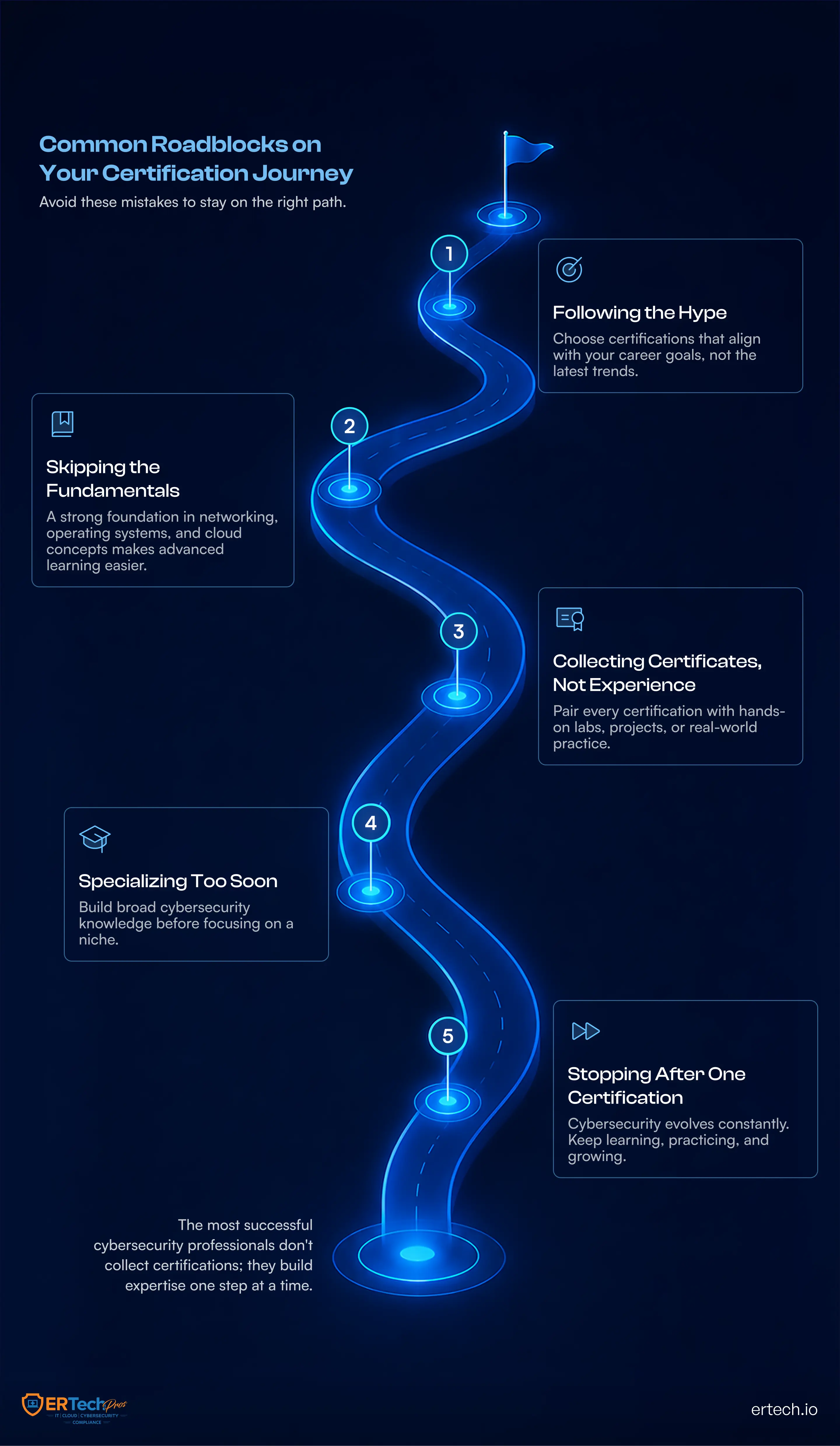
There's no single "best" path, only the one that aligns with your interests and long-term goals. Defining your destination first makes it much easier to choose certifications that support your career instead of collecting credentials that don't fit together.
Step 2: Build Your Foundation Before Earning Certifications
Cybersecurity certifications validate knowledge; they don't teach technology from scratch. Building a solid technical foundation first makes certification training more meaningful and prepares you for real-world security work.
If you have an IT background, you're already familiar with technologies such as networking, operating systems, and cloud platforms. Your focus should be on understanding how attackers exploit them and how to defend against those threats.
If you're new to technology, start by learning the fundamentals:
- Networking and TCP/IP
- Windows and Linux administration
- Identity and access management
- Cloud computing basics
- Basic scripting and virtual machines
Hands-on practice is just as important. A simple home lab lets you apply concepts, experiment with security tools, and build practical skills that certification exams alone can't provide.
Step 3: Earn Your First Cybersecurity Certification
Once you've built a strong technical foundation, it's time to validate your knowledge with your first certification. Don't get overwhelmed by the number of options; your first certification should strengthen your fundamentals, not prepare you for a senior role.
The best cybersecurity certifications for beginners cover core topics such as:
- Threats and attack methods
- Malware and phishing
- Network security basics
- Risk management
- Incident response
Many certification providers offer foundational and advanced programs. Choose certifications that align with your current experience and long-term career goals. At this stage, broad knowledge is more valuable than early specialization.
Passing the exam is only the beginning. Continue building hands-on experience through labs, projects, and ongoing learning to turn certification into practical expertise.
Step 4: Specialize as Your Experience Grows
Once you've mastered the fundamentals, it's time to specialize. Whether you're interested in security operations, cloud security, governance and compliance, penetration testing, or security leadership, choose certifications that align with your career goals.
At this stage, cybersecurity certification training becomes more hands-on, with labs, simulations, and real-world scenarios that help you apply your knowledge in practical environments.
Step 5: Learn to Apply Security Frameworks
As your career grows, understanding governance frameworks also strengthens your knowledge of cybersecurity risk management, helping organizations identify, assess, and reduce cyber risk.
Many professionals look for NIST cybersecurity framework certification, but NIST doesn't certify individuals or organizations. Instead, it provides guidance for building and improving cybersecurity programs.
A cybersecurity training certification that includes governance and compliance can help you apply these principles in real-world environments.
Step 6: Turn Certifications Into Real-World Experience
A certification proves your knowledge, but experience shows you can apply it. Employers value hands-on skills just as much as credentials.
Building home labs, participating in CTF challenges, and working on real-world projects are all considered cybersecurity best practices because they reinforce the knowledge gained through certification
Cybersecurity is a field of continuous learning, so keep building your skills long after you earn your next certification.
Step 7: Apply Your Knowledge in Real-World Environments
Certifications provide a strong foundation, but cybersecurity expertise develops through practical experience. Working alongside experienced security teams exposes professionals to incident response, security operations, governance, vulnerability management, and continuous monitoring that cannot be fully replicated in a classroom.
Whether through internships, enterprise IT teams, managed security service providers (MSSPs), or internal security departments, hands-on experience helps bridge the gap between certification objectives and day-to-day security operations.
How ER Tech Pros Supports Enterprise Security
At ER Tech Pros, we help businesses strengthen their cybersecurity posture and create environments in which security best practices become part of everyday operations. Our team combines experienced cybersecurity professionals with proactive technologies and structured processes to help organizations reduce risk before incidents occur.
Your Roadmap Doesn't End With a Certification
Cybersecurity isn't a profession where learning stops after earning a credential.
Every new technology, cloud platform, regulatory requirement, and threat actor introduces new challenges that require security professionals to adapt continuously. Keeping up with cybersecurity trends in 2026 ensures your skills remain relevant as technologies and attack methods continue to evolve.
A well-planned cybersecurity certification roadmap helps you make smarter decisions about where to invest your time and effort. Instead of collecting certifications at random, you build knowledge progressively, develop practical skills, and specialize in areas that align with your long-term goals.
Remember the roadmap:
✔ Choose your career direction.
✔ Build strong technical foundations.
✔ Earn foundational certifications.
✔ Specialize as your experience grows.
✔ Apply your knowledge through real-world practice.
✔ Continue learning throughout your career.
Following these steps won't just help you earn certifications; it will help you build expertise that remains valuable throughout your cybersecurity journey.
Start Your Cybersecurity Journey with Confidence
Building a successful cybersecurity career takes more than earning certifications. Stay informed about evolving threats, industry best practices, and real-world security operations as you continue developing your skills.
Got Questions?
We've Got Answers
Find clear answers to common questions that help guide your healthcare IT operations.
Healthcare IT Solutions Built for Every Critical Second

Unified Communications 101: How VoIP, Video, and Messaging Fit Together

Why Retail Businesses Are Prime Targets for Cyberattacks